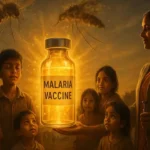

In a landmark move against malaria, the Indian Council of Medical Research (ICMR) has granted licenses to five Indian pharmaceutical companies to manufacture the country’s first indigenous malaria vaccine, AdFalciVax. Designed to target the highly dangerous Plasmodium falciparum parasite, the vaccine is expected to significantly accelerate India’s mission to eliminate malaria by 2030.
A Historic Step in India’s Fight Against Malaria
AdFalciVax, developed at ICMR’s Regional Medical Research Centre (RMRC) in Bhubaneswar, is the first vaccine of its kind in India. Unlike conventional treatments, this vaccine works in a unique way—blocking the malaria parasite before it can even enter the bloodstream. Experts say this not only prevents infection but also reduces the risk of transmission.
The vaccine is also cost-effective, can be produced in large quantities, and remains stable for over nine months at room temperature—making it suitable for use in rural and remote regions.
Who Will Manufacture the Vaccine?
ICMR has licensed five Indian companies to produce AdFalciVax. After final testing, these firms will bring the vaccine into wider use:
- Indian Immunologicals Limited
- TechInvention Lifecare Pvt Ltd
- Panacea Biotec Ltd
- Biological E Limited
- Zydus Lifesciences
India’s Malaria Elimination Targets
India aims to report zero new malaria cases by 2027 and fully eliminate the disease by 2030. Considerable progress has already been made: malaria cases fell from around 6.4 million in 2017 to just 2 million in 2023, while annual deaths dropped from 11,100 to about 3,500 during the same period.
In 2024, India was officially removed from the World Health Organization’s “High Burden, High Impact” list—marking global recognition of the country’s progress.
The Remaining Challenges
Despite steady progress, certain regions remain high-risk. States like Odisha, Chhattisgarh, Jharkhand, and parts of the Northeast still report higher caseloads, largely due to limited healthcare infrastructure. Urban areas are also vulnerable after flooding. In September alone, Delhi recorded 264 malaria cases, the highest in four years.
Why AdFalciVax Could Be a Game-Changer
Health experts believe AdFalciVax could transform India’s malaria fight. By neutralizing Plasmodium falciparum, it not only protects individuals but also curbs community transmission. When combined with India’s existing “Test, Treat, and Track” strategy, experts say it could fast-track malaria elimination.
Human trials are expected soon, and doctors are optimistic that this vaccine might even help India beat its 2030 malaria-free target.