
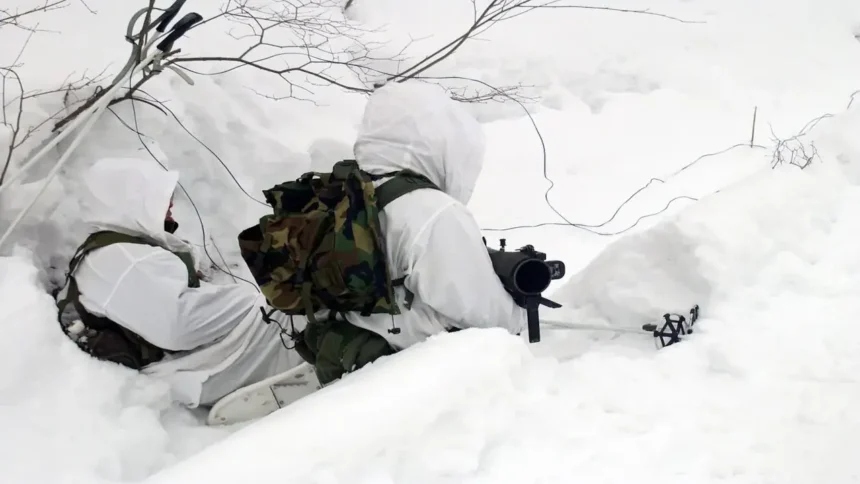
Ladakh: A major avalanche at the Siachen Glacier in Ladakh has claimed the lives of three Indian Army soldiers, including two Agniveers, while on patrol duty. The deadly incident occurred when an avalanche struck a post in the northern glacier region. Rescue operations were launched immediately, but three soldiers from the Mahar Regiment—hailing from Gujarat, Uttar Pradesh, and Jharkhand—were martyred.
According to initial reports, five personnel were trapped in the avalanche. While one Captain has been rescued, search and rescue teams remain engaged in locating the others. The Indian Army is coordinating support from Leh and Udhampur to aid the ongoing operations.
Siachen: The World’s Highest Battlefield
The Siachen Glacier, located at an altitude of nearly 20,000 feet in the Karakoram range, is the world’s highest and most dangerous battlefield. Temperatures here can plunge to –60°C, with soldiers facing freezing winds, snowstorms, and frequent avalanches.
This particular avalanche struck near the base camp at around 12,000 feet, while the soldiers were on patrol. The northern glacier region, where the incident occurred, lies at an altitude of 18,000–20,000 feet.
Since Operation Meghdoot in 1984, more than 1,000 Indian soldiers have lost their lives in Siachen—not in combat, but due to extreme weather conditions, avalanches, and high-altitude health hazards.
Massive Rescue Efforts Underway
The Army and Air Force immediately launched joint rescue operations. Specialized Avalanche Rescue Teams (ARTs) were deployed, equipped to trace and recover soldiers trapped under thick snow. Helicopters including Cheetah and Mi-17 have been pressed into service for casualty evacuation.
Despite improved infrastructure in recent years—including DRDO’s all-terrain vehicles, Chinook heavy-lift helicopters, Dyneema safety ropes, and ISRO’s telemedicine nodes—rescue operations in Siachen remain extremely challenging due to hostile weather and terrain.
A Strategic but Perilous Zone
Stretching 76 kilometers across the Karakoram range, the Siachen Glacier is of immense strategic importance. It lies between Pakistan-occupied Gilgit-Baltistan and the Shaksgam Valley (ceded by Pakistan to China), serving as a critical barrier to safeguard Ladakh.
India took control of the glacier in 1984 through Operation Meghdoot, following ambiguities left in the 1949 Karachi Agreement. Since then, Indian troops have maintained a stronghold, but at a heavy cost.
Between 1984 and today, over 870 soldiers have died due to weather-related incidents, while relatively fewer casualties occurred in combat. Notable tragedies include the 2016 avalanche where 10 soldiers were buried; Lance Naik Hanumanthappa Koppad was pulled out alive after six days but later succumbed. In 2019, four soldiers and two porters also lost their lives in a similar incident.
The Harsh Truth of Siachen
Siachen remains both a symbol of India’s strategic resilience and a reminder of nature’s unforgiving power. Despite technological advancements and improved facilities, avalanches and extreme cold continue to be the deadliest threats for soldiers posted at the glacier.